How to Plan a Dog-Friendly Outdoor Day With an Australian Cattle Dog
Australian Cattle Dogs often want to be involved in everything their families do. They are observant, intelligent, physically capable, and usually happiest when an activity gives them a clear purpose.
That does not mean a successful outdoor day should be measured by how many miles the dog covers or how exhausted it becomes.
A well-planned outing balances physical movement, training, exploration, mental engagement, and rest. This is especially important for rescue dogs, whose previous experiences, confidence levels, and responses to unfamiliar environments may not yet be fully understood.
Whether the plan involves a quiet park, a training field, a campground, or a nearby trail, the activity should be built around the individual dog rather than the breed’s reputation for endless energy.
Start With the Dog in Front of You
Australian Cattle Dogs are commonly described as high-energy working dogs, but individual needs can vary considerably.
Age, health, conditioning, training history, confidence, and previous injuries can all affect how a dog responds to an outdoor activity. A young dog with limited training may become overstimulated long before it becomes physically tired. An older dog may remain enthusiastic even when its body needs a shorter route and more frequent breaks.
Newly adopted rescue dogs may need additional time before visiting busy or unfamiliar environments. A dog that appears confident at home may react differently to bicycles, running children, wildlife, traffic, unfamiliar dogs, or sudden outdoor noises.
Before planning a full day, consider whether the dog can:
Walk calmly on a leash in familiar areas
Respond to its name and basic cues
Recover after noticing a distraction
Accept food or rewards outdoors
Rest in a new environment
Remain comfortable around unfamiliar people, animals, and movement
A short, successful outing usually provides more useful information than an ambitious trip that pushes the dog beyond its current abilities.
Give the Activity a Purpose
Australian Cattle Dogs frequently benefit from activities that involve thought and self-control, not only continuous movement.
A long walk may provide physical exercise, but adding simple tasks can make the experience more satisfying. The dog can practice checking in with the handler, waiting at trail intersections, responding to directional cues, searching for hidden treats, or settling on a portable mat.
Useful outdoor activities may include:
Structured leash walks
Long-line exploration in permitted areas
Recall practice in a secure environment
Scent games
Short obedience sessions
Controlled retrieving
Beginner agility exercises
Place or settle training
Tracking simple scent trails
The objective is not to keep the dog constantly excited. Productive activities should help the dog alternate between action and calm behavior.
For a high-drive rescue dog, learning to pause, observe, and respond to the handler can be just as valuable as running or playing.
Choose the Environment Carefully
The right location can determine whether an outdoor day feels manageable or overwhelming.
For a newly adopted or easily overstimulated dog, begin with a quiet area that offers enough space to move away from distractions. Avoid narrow paths where unfamiliar dogs, bicycles, or runners may approach suddenly.
Before leaving, check:
Whether dogs are permitted
Whether leashes are required
Whether e-bikes are allowed
The expected trail or park traffic
Access to shade and water
Surface conditions
Weather and temperature
Wildlife activity
Parking or transportation options
The nearest safe exit point
A shorter loop with several exit options is often better than a long route that requires the dog to continue after becoming tired or stressed.
For rescue dogs that are still adjusting, predictability matters. Visiting the same quiet location several times can help the dog build confidence before the family introduces more challenging environments.
Pack for Training, Safety, and Rest
Outdoor preparation should account for more than distance.
Useful supplies may include:
Fresh water
A collapsible bowl
A well-fitted harness
A standard leash
A long line where permitted
High-value training rewards
Waste bags
A familiar mat or blanket
A towel
Basic first-aid supplies
A tick-removal tool
Paw protection when conditions require it
Current identification
Any necessary medication
Bring enough water for both the dog and handler, even when the destination appears to have water available. Natural water sources may not always be accessible or appropriate for drinking.
A familiar mat can also give the dog a clear place to rest. This can be particularly helpful for dogs that struggle to settle when the environment is busy.
Plan Transportation Separately From the Dog’s Exercise
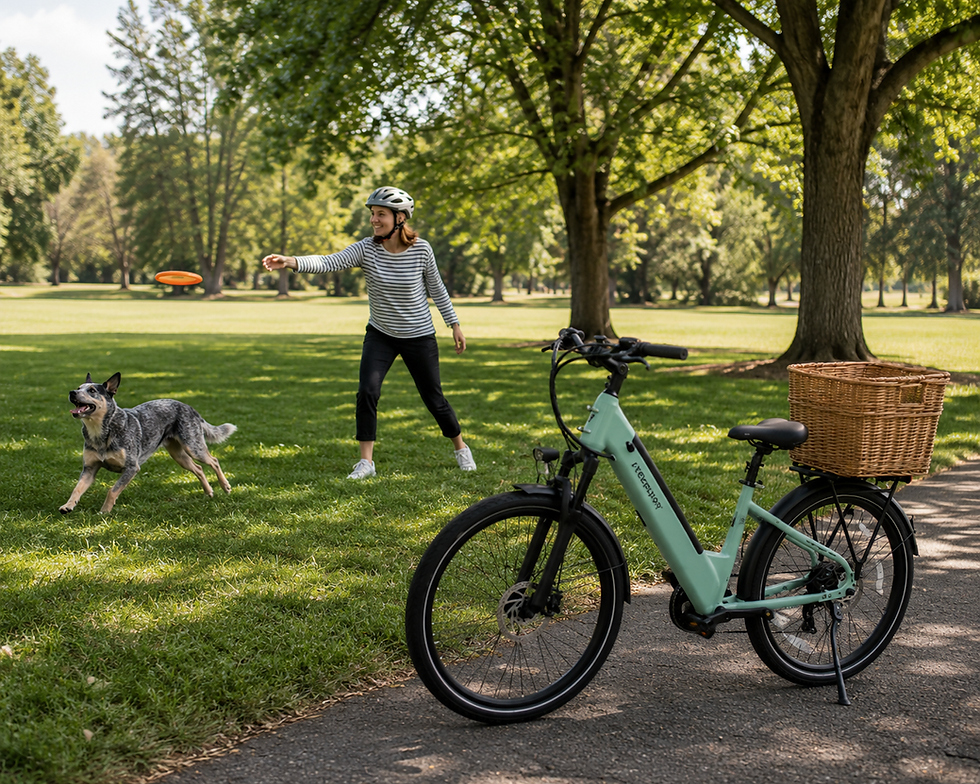
Some owners use bicycles or electric bikes to reach parks, recreation areas, or nearby outdoor spaces.
An e-bike can also make it easier for the rider to carry water, training equipment, a long line, protective gear, and other supplies.
However, transportation for the owner should be planned separately from exercise for the dog.
Allowing a dog to run beside a moving bicycle can create risks involving traffic, pavement temperature, sudden direction changes, wildlife, other dogs, and the dog’s natural tendency to chase or herd moving objects. This is particularly relevant for Australian Cattle Dogs, which may become highly focused on wheels and fast movement.
A medium-sized Australian Cattle Dog should also not be placed in a carrier intended for small pets. Any equipment used to transport a dog must be purpose-built, appropriately sized, securely attached, and suitable for the dog’s weight and physical condition.
Owners who use an e-bike for their own transportation can review PUCKIPUPPY range of electric bikes while comparing rider fit, storage options, braking, handling, local access rules, and the type of terrain they expect to encounter.
For a dog-focused outdoor day, practical equipment storage and predictable control may be more relevant than maximum motor output or top speed. Water, training tools, safety supplies, and the return journey should all be considered when choosing a transportation setup.
The e-bike should support the owner’s preparation and travel. It should not replace the dog’s structured exercise or be presented as an unverified method of transporting an Australian Cattle Dog.
Watch for Overstimulation
Australian Cattle Dogs do not always stop when they have had enough.
Some dogs continue running, chasing, or working even after their ability to make calm decisions has started to decline. Owners should watch for signs of overstimulation as well as physical fatigue.
Possible signs include:
Increasing leash pulling
Fixating on bicycles, runners, wildlife, or other dogs
Barking repeatedly
Ignoring familiar cues
Taking treats roughly
Refusing food
Becoming unable to settle
Repeatedly scanning the environment
Chasing movement
Excessive panting
Moving with less coordination
Becoming unusually irritable
A dog that stops responding is not necessarily being stubborn. The environment may have become too difficult for the dog to process.
Create distance from the trigger, lower the activity level, and allow the dog time to recover. Ending the outing early can be the correct decision.
For rescue dogs, repeated experiences of being pushed beyond their comfort level can make future outings harder. Shorter trips that end successfully are more likely to build useful confidence.
Build Rest Into the Schedule
Rest should not begin only after the dog is completely exhausted.
Plan quiet breaks throughout the outing. Offer water, move into the shade, and give the dog an opportunity to lie down without being approached by people or other animals.
A practical outdoor routine might include:
A short structured walk
Several minutes of sniffing or exploration
A brief training activity
A water and rest break
Another short period of movement
A calm return home
The exact order can change, but the dog should have opportunities to move between active and quiet states.
This is particularly valuable for high-drive dogs. Learning to settle after activity helps build emotional regulation and makes future outings easier to manage.
Adjust for Weather and Terrain
Australian Cattle Dogs may appear willing to continue in conditions that are no longer comfortable.
Hot pavement, direct sunlight, humidity, loose gravel, sharp rocks, snow, ice, and uneven terrain can all affect the dog’s safety. Check the dog’s paws during breaks and watch for changes in gait.
On warm days, schedule activities during cooler hours and choose shaded routes. Bring more water than expected and reduce the intensity of the outing.
Cold weather also requires planning. A dog that remains active may stay warm, but a wet or resting dog can cool quickly. Carry a towel and consider whether the dog needs additional protection during longer breaks.
Route difficulty should increase gradually. A dog that handles a neighborhood walk well is not automatically ready for a long trail with steep sections, wildlife, unfamiliar surfaces, and limited exit points.
Check the Dog After the Outing
The outdoor day is not finished when the family returns home.
Check the dog for:
Ticks
Burrs and plant material
Cuts or abrasions
Paw irritation
Tenderness
Unusual stiffness
Changes in appetite
Difficulty settling
Signs of excessive fatigue
Offer water and provide a quiet place to rest.
Also consider how the activity affected the dog’s behavior. A productive outing may leave the dog pleasantly tired but still responsive and able to settle. An outing that was too intense may result in pacing, barking, restlessness, irritability, or difficulty sleeping.
Keeping brief notes can help identify which environments and activities work best. Over time, the family can build an outdoor routine around the dog’s actual responses instead of relying on general assumptions about the breed.
Let Success Be Individual
A dog-friendly outdoor day does not need to involve a long hike or an ambitious schedule.
For one Australian Cattle Dog, success may mean completing a challenging trail and settling calmly afterward. For a newly adopted rescue dog, success may mean spending 20 relaxed minutes in a quiet park, responding to several cues, and returning home before becoming overwhelmed.
Both outcomes are meaningful.
Australian Cattle Dogs often thrive when their families provide purposeful movement, clear communication, mental challenges, and consistent boundaries. The best outdoor plans bring those elements together while respecting the dog’s age, health, confidence, and current training level.
The goal is not simply to tire the dog out. It is to create an experience in which the dog can move, think, explore, rest, and remain connected to the person holding the leash.