
The Tail Lights Vanish but the Accident Doesn't
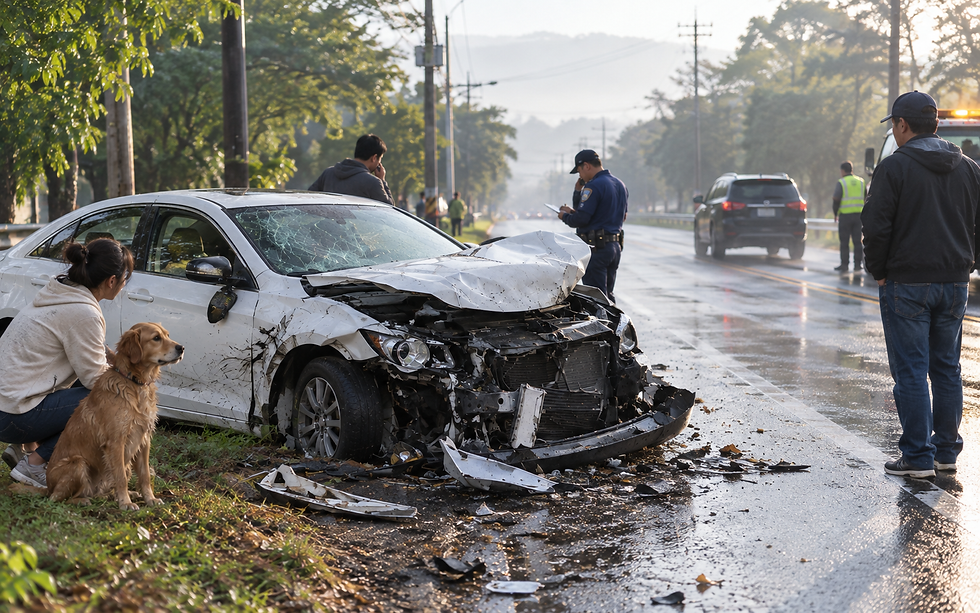
There's a specific kind of disbelief that happens watching another car simply drive away after hitting yours. It doesn't feel real at first, a small hope that they're pulling over somewhere ahead, that surely they're not actually just leaving.
Then the taillights get smaller, and smaller, and eventually disappear around a curve or over a hill, and reality sets in. They're gone. The damage is still sitting right there, the confusion is still sitting right there, and now there's a whole new problem layered on top of the original one.
That disorienting experience is exactly what defines hit and run accidents, and knowing what to actually do in that moment, while the shock is still fresh, matters more than it might seem right in the middle of it.
Your First Priority Is Not Chasing the Driver
Every instinct might scream to follow, to catch up, to get that license plate before it disappears entirely. That instinct is understandable, and it's also genuinely dangerous. Chasing another vehicle can easily turn one bad situation into two.
Safety has to come first instead. Checking for injuries, both your own and anyone else's, matters more than pursuit ever could. Contacting emergency services becomes appropriate whenever injuries are present, or even simply suspected, given how adrenaline can mask pain in those first minutes.
Letting the other driver go, frustrating as it feels, is almost always the safer choice. There are better ways to identify a responsible driver than a risky high-speed pursuit down an unfamiliar road in the immediate aftermath of a collision.
Tiny Details Can Become Valuable Clues
Even a fleeting glimpse can hold genuinely useful information. A partial license plate, even just a few characters, can meaningfully narrow down identification. Vehicle color, make, and model all help too, along with any visible damage the other car sustained during the collision.
Direction of travel matters, potentially helping establish where that vehicle might have gone after leaving the scene. If there was any glimpse of the driver, general details can sometimes prove useful too, though memory under stress isn't always perfectly reliable.
Witnesses nearby may have noticed something that wasn't visible from your own angle. Even small, seemingly incomplete observations can sometimes combine with other evidence to eventually paint a considerably clearer picture of what actually happened.
Cameras May Have Seen What You Missed
Beyond direct observation, cameras scattered throughout the surrounding area sometimes capture what a shaken driver simply couldn't take in during those chaotic first seconds. Traffic cameras positioned nearby occasionally catch relevant footage of the collision itself.
Doorbell cameras from nearby homes have become surprisingly useful in these situations too, sometimes capturing angles no traditional traffic camera ever would. Businesses along the road frequently have security systems as well, occasionally facing directly toward the street.
Dashcams, whether in your own vehicle or someone else's nearby, can provide some of the clearest evidence available. Checking these potential sources promptly matters, since footage doesn't always stick around indefinitely before getting automatically overwritten.
Insurance May Matter Even When the Driver Is Missing
Not being able to identify the responsible driver doesn't necessarily mean there's no path forward at all. Uninsured motorist coverage, where it applies, sometimes extends specifically to situations involving unidentified drivers who left the scene without exchanging any information.
Understanding what a particular policy actually covers matters considerably here, since coverage details and applicability can vary quite a bit depending on the specific policy and the exact circumstances surrounding the incident itself.
Exploring these options, even without an identified responsible party, can sometimes offer a genuine path toward addressing the practical and financial fallout of a collision where the other driver simply chose not to stick around.
Conclusion
The driver who leaves takes themselves out of the immediate picture, but that departure doesn't necessarily erase everything they left behind. Small details, potential camera footage, and applicable insurance coverage can all still play a meaningful role afterward.
Acting quickly, while memory is still relatively fresh and camera footage hasn't yet been overwritten, gives a considerably better shot at eventually identifying what actually happened, even in a situation that initially feels genuinely hopeless.
Recognizing that a hit and run isn't necessarily the dead end it feels like in the moment offers at least some reassurance during a genuinely disorienting, frustrating experience nobody plans for ahead of time.


