
How to Keep Your Herding Dog Safe Around Livestock Handling Equipment on the Farm
- May 6
- 4 min read
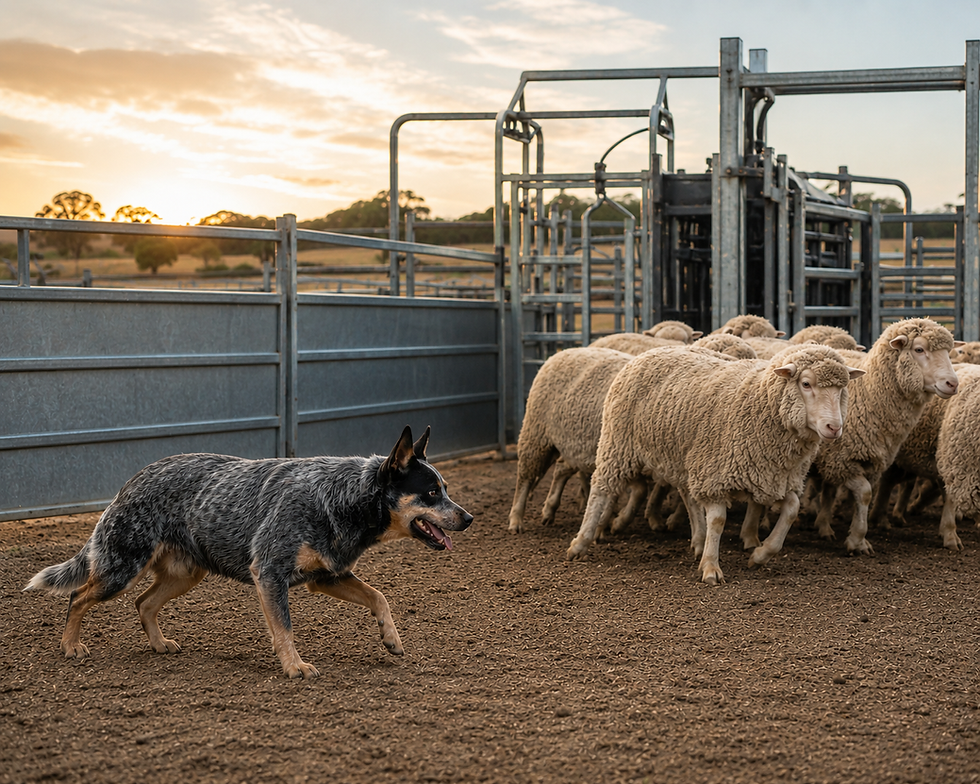
Livestock handling gear takes up a lot of space on a working farm. Gates to keep sheep and goats secure. Chutes that swing open. Feeders sitting heavy in the corners. They’re amazing for saving time. They keep everything efficient.
But bring an active herding dog into the picture, and things get risky. A cattle dog loves to move. Loves to push stock. That drive can put them too close to a swinging gate. Or a shifting panel. One wrong angle, and you’ve got a pinched paw. Maybe a bump from a panicked sheep. It doesn’t mean the equipment setup is wrong. It means you need to run it more safely. Here’s how to keep the farm moving while keeping your herding dog safe in it.
Invest in High-Quality, Durable Equipment
Livestock equipment absorbs impact every day. Sheep lean into gates. Feeders take hits when animals crowd in. Flimsy builds can bend or fall apart under pressure. Dogs notice that. They step in to fix what looks wrong. They mean well. But they can get pinned between shifting panels and pushing stock. Or clipped by a swinging gate when everything gives way.
Strong gear keeps everything steady when stock pushes hard. When buying equipment, focus on solid frames and reliable hinges. The goal is to keep everything aligned under load.
Paragon Livestock Solutions builds hot-dipped galvanized sheep and goat handling equipment made for that kind of farm reality. Their focus is durability. Their feeders and gates hold up under constant use. When the setup stays stable, your dog doesn’t have to second-guess every movement. They stay focused on the stock. Not on dodging equipment.
Create Layouts with No Tight Spots
When panels meet at harsh angles, tight spots appear. Chutes that turn sharply do the same thing. Water troughs can also cause trouble when they sit in the wrong spot. They block the flow. They force animals to suddenly change direction.
Animals bunch up fast in those areas. They hesitate, then surge forward. Dogs sometimes like to test boundaries. Herding dogs will do it when movement stalls. They push in closer than they should. That could put them in harm’s way.
So, spread out panels. Place feeders and handling equipment where they don’t break the flow. Avoid sharp turns that force hard pivots. When movement stays smooth, livestock stay calmer. And your dog avoids tight pressure spots.
Introduce Dogs to Equipment Gradually
New handling setups can overwhelm a dog. Metal gates clang. Panels shift. Livestock rush through narrow lanes. That kind of motion and noise can pull a dog in too fast. Curiosity kicks in. They get too close to the equipment. That’s where things can get dangerous.
Walk the dog through the area before any livestock work begins. Let them hear the sounds first. Keep moving parts like feeders running only when the dog is already comfortable staying back. Once the environment stops surprising them, they stop reacting. They’ll start working with better awareness.
Train Your Dog to Keep Their Distance
Herding dogs naturally want to get close. That instinct helps in open fields. But it gets risky around gates and chutes. One sudden swing can trap them in a bad spot.
Teach clear spacing rules during work. Use the “stop” command to hold position before they enter tight zones. Reward them for staying outside the handling area when pressure builds. Over time, they learn where to stand without being told.
Build a Predictable Handling Routine
Farm work gets messy when the pattern keeps changing. One day, sheep move through the chute one way. The next day, the gates open in a different order. Your dog stops reading flow. They start guessing each next step. That’s when timing slips. In a panic, they might end up too close to moving equipment.
Keep the same sequence every time. Same entry points. Same movement through gates. Same cues before each step. Your dog learns the rhythm. They won’t react fresh during each run. This also supports healthier herd management. Your livestock settles faster when handling stays familiar. With consistency, your dog will position themselves before your go signal.
Do Routine Checks on Equipment
Equipment faults build up quietly. A loose hinge here. A gate that doesn’t fully latch there. At first, it feels minor. Then, something shifts mid-work. Something falls apart. When your dog is nearby, it could hurt them. Especially if they’re smaller.
So, do routine checks on all equipment. Walk the handling area daily. Test gates. Check panels. Fix anything that feels off, even slightly. Reliable sheep and goat handling equipment should move smoothly every time without surprise shifts. When everything works the way it should, your dog and livestock won’t get pulled into sudden emergencies. They stay focused and safe in the flow of work.
Conclusion
When livestock-handling equipment is set up correctly, the farm becomes easier to read. Movement makes sense. Danger zones are clear. Your dog won’t improvise every second. They start understanding how to work with the system. And to avoid the areas that might harm them.
Invest in durable feeders and gates. That way, flimsy equipment won’t fall apart and hurt your dog and livestock. Make sure your cattle dog’s familiar with the equipment, too. Build a familiar handling routine. Train them to avoid tight spots. If your dog does their job instead of dodging equipment, your farm will run smoothly.


