
Best Pet Insurance for Puppies: How to Choose (+ 8 Top Plans)

Compare puppy insurance costs and waiting periods before the pre-existing clock starts on your dog
A healthy puppy burns through vet money before anything goes wrong. Vaccine appointments land three or four times before week 16, and 2024 CareCredit data puts the average routine visit at $101 per trip. Spay or neuter surgery follows within months, then a microchip, then flea and heartworm prevention. National estimates run as high as $4,272 for a dog's first year with routine care included, and that figure assumes zero emergencies. Against that ledger, picking a puppy policy becomes a timing decision as much as a shopping decision: your dog will never again have a medical record this clean, and each uninsured week gives an insurer one more chance to stamp something "pre-existing."
The rankings below compare eight carriers on the terms that matter for a dog under a year old, starting with how early you can enroll and how fast the waiting periods clear. The sections after the rankings walk through enrollment timing and the pre-existing trap, then follow the cost curve from eight weeks to the senior years.
Why you can trust this comparison
● We compared the eight carriers on published enrollment ages and waiting periods, plus base coverage terms, current as of July 2026.
● Satisfaction calls draw on more than 56,000 Trustpilot reviews across the seven carriers with pet-specific profiles (Nationwide Pet has none).
● Every downside named below traces to documented Trustpilot complaints, never to guesswork.
The best pet insurance for puppies
1. Lemonade
Best for beating the pre-existing clock
Trustpilot rating: 4.1/5 (6,089 reviews)
Puppy pricing: From $10 a month
Wellness add-on: Available (Routine Vet Care tiers)
Our expert take
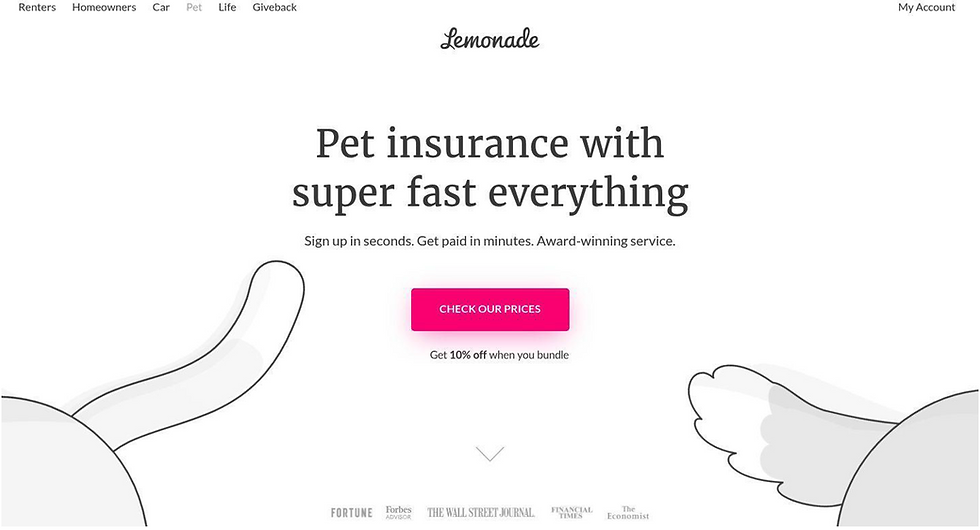
Lemonade makes the strongest case for the eight-week signup. Premiums start at $10 a month, and Lemonade quotes them against a medical file with nothing in it, so no exclusion can attach to a condition that hasn't shown up yet. The waiting periods suit a young dog. Accident coverage is live from day one, illness coverage arrives at day 14, before most puppies finish their shot series, and the orthopedic wait, the longest clock on the policy, runs just 30 days. Claims run through the app, which pays simple ones out in minutes, and you manage the whole policy from your phone. Lemonade sells pet coverage across much of the country, and its footprint keeps growing.
What owners report
Trustpilot reviewers score Lemonade 4.1 across 6,089 reviews, and claim speed plus the low-friction app draw the heaviest praise. The sharpest complaints come from owners who found waiting-period terms hard to spot at signup or hit a pre-existing denial after enrolling late.
Pros
● Lowest published entry price in this group at $10 a month
● No accident wait, and the illness wait wraps by day 14
● Optional wellness tiers exist for the shot-heavy first year
Cons
● Availability hasn't reached every state yet
● Reviewers describe waiting-period fine print as easy to miss at signup
Healthy Paws

Best for cap-free coverage from eight weeks
Trustpilot rating: 4.1/5 (3,615 reviews)
Puppy pricing: Quote-based, positioned as a value plan
Wellness add-on: None
Our expert take
Healthy Paws sells one plan and aims it young. Its Puppy Plans accept dogs from eight weeks old, and hereditary conditions such as hip dysplasia stay covered for dogs enrolled before problems surface.
Reimbursement reaches 90%, with an option that removes annual and lifetime payout caps, a structure that pays off if a puppy grows into an expensive diagnosis. Filing a claim starts with a photo of the vet bill in the app, and unlimited Airvet telehealth comes along at no extra charge, around the clock. The plan works at any licensed vet in the US, emergency rooms and specialists included.
What owners report
Reviewers land at 4.1 across 3,615 Trustpilot entries, with 80% awarding five stars. Praise clusters around generous cap-free payouts and fast app claims. The 16% one-star share tells the other side: premium climbs at renewal and disputed claims.
Pros
● Enrolls puppies at eight weeks with hip dysplasia coverage intact
● Cap-free payout option for worst-case diagnoses
● Free Airvet telehealth at any hour of the day
Cons
● No wellness option, so shots and spay costs stay out of pocket
● Reviewers report rising premiums and occasional claim disputes
ASPCA Pet Health Insurance

Best for hereditary and behavioral coverage
Trustpilot rating: 3.7/5 (6,552 reviews)
Puppy pricing: Quote-based; editorial estimates land near $40 a month for dogs
Wellness add-on: Optional
Our expert take
The ASPCA name sits on policies that the Crum & Forster group has underwritten since 2006, and the product leans on breadth. Complete Coverage plans pay up to 90% back, and the base policy carries hereditary and congenital conditions, plus behavioral care that many rivals treat as an upsell. That combination matters for breeds with known genetic baggage. A 30-day money-back guarantee gives new puppy owners an exit if the policy disappoints on paper, and coverage works at every licensed vet across the US and Canada. Account management and claims run online at any hour.
What owners report
The Trustpilot score reads 3.7 across 6,552 reviews. Owners praise the coverage breadth and the trust the brand carries; the recurring gripes involve premiums that climb as pets age and reimbursements that show up late.
Pros
● Hereditary, congenital, and behavioral conditions in the base plan
● 30-day money-back guarantee for second thoughts
● Works in both the US and Canada
Cons
● Premiums rise with age and can get expensive
● Some reviewers report reimbursement delays and uneven service
Pets Best

Best for a short accident waiting period
Trustpilot rating: 3.6/5 (6,246 reviews)
Puppy pricing: Dog accident and illness plans run about $36 to $58 a month; accident-only starts at $9
Wellness add-on: Optional
Our expert take
Pets Best has spent two decades in the category and covers more than 900,000 pets. Its two-day accident waiting period is the shortest of any carrier here that imposes one, useful for a chew-everything puppy whose first claim tends to involve a swallowed object rather than an illness. The BestBenefit line lets you dial deductibles and payout limits until the premium suits a first-year budget already absorbing shots and surgery, and the highest tiers come with zero annual or lifetime caps.
Optional direct vet pay at participating clinics spares you from fronting a large bill, and accident-only plans from $9 a month give cash-strapped owners a floor.
What owners report
Trustpilot places Pets Best at 3.6 across 6,246 reviews. Value for money and easy digital claim filing earn the compliments. The top grievance, by a wide margin, is steep premium growth at renewal, followed by slow reimbursements.
Pros
● Two-day accident wait, second in this group only to Lemonade
● Accident-only plans from $9 a month
● Direct vet pay available at participating clinics
Cons
● Steep renewal increases lead the complaint log
● Some owners report reimbursement delays
Trupanion

Best for lifetime payouts on chronic conditions
Trustpilot rating: 4.4/5 (11,771 reviews)
Puppy pricing: Quote-based, at the high end of the market
Wellness add-on: None
Our expert take
Trupanion structures its single plan around the long game. Reimbursement sits at 90% with unlimited lifetime payouts, and the deductible works per condition instead of per year, which rewards a dog that develops one chronic problem as a puppy and claims on it for life. VetDirect Pay settles bills at checkout with participating clinics, so a five-figure emergency never has to cross your credit card.
Across 25 years the company has settled more than $4 billion in claims and insures over 3 million pets, and standard coverage takes in hereditary and congenital conditions rather than gating them behind an add-on.
What owners report
At 4.4 across 11,771 Trustpilot reviews, Trupanion holds one of the strongest records in the group. Owners celebrate the checkout-time vet payments and large payouts; the strong standing it holds among veterinarians repeats as a theme. Complaints target price and deductible confusion.
Pros
● Unlimited lifetime payouts with no caps
● VetDirect Pay removes the reimbursement wait at participating clinics
● Hereditary and congenital conditions covered as standard
Cons
● Among the most expensive premiums in the category
● Per-condition deductible confuses some buyers, per reviews
Embrace

Best for a deductible that shrinks
Trustpilot rating: 3.9/5 (10,830 reviews)
Puppy pricing: Quote-based, mid-market
Wellness add-on: Wellness Rewards (optional)
Our expert take
Embrace turns a healthy puppy into a discount. Its Healthy Pet Deductible sheds $50 for every claim-free year on the books, so an owner who enrolls at eight weeks and coasts through a lucky stretch watches the out-of-pocket hurdle shrink before the dog ever needs it. Reimbursement tops out at 90% and travels to whichever licensed vet you pick, and dental illness protection reaches $1,000 a year with no prior dental exam demanded, a rare inclusion at this price tier. Free telehealth operates around the clock, and breed-specific and congenital problems fall under the policy so long as no symptoms predate it. Embrace also turns around 90% of claims within 10 days.
What owners report
Trustpilot has Embrace at 3.9 across 10,830 reviews. The shrinking deductible and dental coverage earn loyalty, and reviewers mention solid claims handling as well. On the negative ledger, owners cite premium hikes with age and disputes over coverage limits.
Pros
● Deductible falls $50 each claim-free year
● Up to $1,000 a year in dental illness benefits
● Free 24/7 telehealth on every policy
Cons
● Premiums increase with age and at renewal
● Reviewers report claim denials and coverage-limit disputes
Spot
Best for flexible annual limits
Trustpilot rating: 4.7/5 (11,430 reviews)
Puppy pricing: Quote-based, value tier
Wellness add-on: Optional
Our expert take
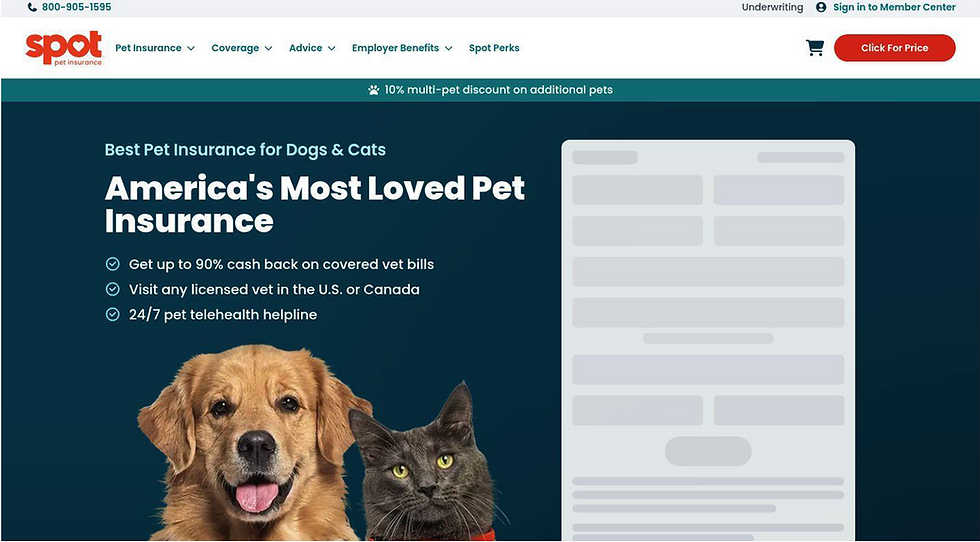
Spot writes policies for pets from eight-week-old puppies to 21-year-old seniors, the widest age window on this list, which means the plan you buy now never ages your dog out. Cash back reaches 90%, and annual limits scale all the way to unlimited, so you can start lean during the puppy year and raise the ceiling later. Every tier includes a 24/7 telehealth line, and the base accident and illness plan pays for microchip implantation and behavioral therapy. Reviewers describe reimbursements landing in about 48 hours, and coverage holds at licensed vets throughout the US and Canada.
What owners report
Spot's 4.7 across 11,430 Trustpilot reviews ranks near the top of this field, with 85% of reviewers awarding five stars. Fast reimbursements and smooth claims dominate the praise. Critics point to renewal price rises and confusion over exclusions.
Pros
● Enrolls pets from eight weeks with no upper age limit
● Annual limits scale up to unlimited
● Telehealth access around the clock on every plan
Cons
● Premiums can rise at renewal
● Some reviewers describe coverage-limit and exclusion confusion
Nationwide Pet
Best for multi-species households
Trustpilot rating: No pet-specific profile
Puppy pricing: Quote-based
Wellness add-on: Wellness tiers available
Our expert take
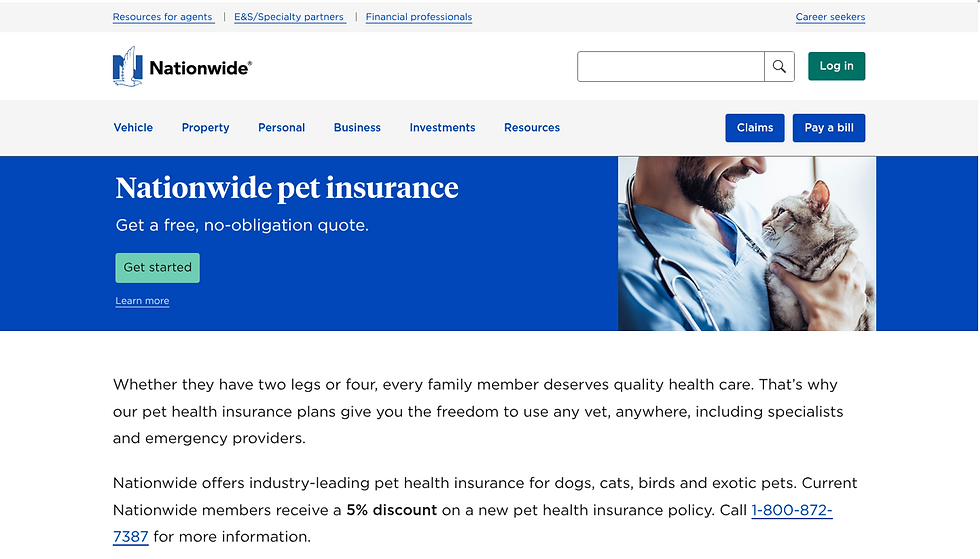
Nationwide traces its pet business to 1982, when it operated as VPI, which makes it the longest-running name on this list and the largest US pet insurer. The pitch is breadth of species. It insures birds and exotic pets alongside dogs and cats, coverage almost no major rival matches, so a household adding a puppy to a menagerie can keep one carrier. Existing Nationwide members shave 5% off, and whole-pet and wellness tiers exist. Any vet qualifies, emergency and specialty providers included. Scale and history stand in for the digital polish younger carriers compete on.
What owners report
Nationwide has no pet-specific Trustpilot profile, so review evidence runs thinner here than anywhere else on this list. The documented complaints that do surface describe enrollment and renewal restrictions after recent plan changes, along with a claims process that moves at legacy-carrier speed.
Pros
● Covers birds and exotic pets on top of dogs and cats
● 5% discount for existing Nationwide members
● Longest track record in US pet insurance
Cons
● Members report frustrating enrollment and renewal restrictions after plan changes
● Claims move slower than app-first rivals, per documented complaints
Summary: the eight puppy insurance picks at a glance
Provider | Best for | Trustpilot | Puppy pricing | Wellness add-on
|
Lemonade | Beating the pre-existing clock | 4.1/5 | From $10/mo | Available |
Healthy Paws | Cap-free coverage from eight weeks | 4.1/5 | Quote-based | None |
ASPCA | Hereditary and behavioral coverage | 3.7/5 | Quote-based, near $40/mo | Optional |
Pets Best | Short accident waiting period | 3.6/5 | $36-$58/mo; accident-only from $9 | Optional |
Trupanion | Lifetime payouts on chronic conditions | 4.4/5 | Quote-based, high end | None |
Embrace | A deductible that shrinks | 3.9/5 | Quote-based, mid-market | Optional |
Spot | Flexible annual limits | 4.7/5 | Quote-based, value tier | Optional |
Nationwide Pet | Multi-species households | No pet-specific profile | Quote-based | Available |
What puppy insurance costs at each life stage
Puppy coverage sits at the cheap end of a curve that climbs for the rest of the dog's life. Insurers price on risk, and an eight-week-old with a blank file carries the least risk it will ever carry.
Life stage | Monthly cost signal | Where the number comes from
|
Eight-week-old puppy | From $10; starter dog plans cluster near $20 | Lemonade's published floor; marketplace averages for young dogs |
Adult dog, accident and illness | $62 national average | NAPHIA's 2024 industry data |
Adult dog, accident-only | About $16 | 2024 industry averages |
Senior dog | Quote-based and climbing at each renewal | Trustpilot renewal-increase complaints at four of these eight carriers |
The climb is the part owners underestimate. Four of these eight carriers rack up Trustpilot complaints naming renewal increases as a sore point, and Pets Best reviewers rank it as their single loudest grievance. Enrolling early sets your baseline at the bottom of the curve and keeps every later condition inside coverage. Age-based increases still arrive across the industry; the difference is what the policy pays for when they do.
The value math favors the young dog too. US News pegs the average emergency vet visit between $1,000 and $3,000. A starter plan near $20 a month costs about $240 a year, which means a single swallowed sock or broken leg can outweigh a decade of puppy-rate premiums.
What the best puppy plans cover
Base accident and illness policies across these eight carriers pay for the medicine a young dog is most apt to need:
● Diagnostics, including bloodwork, X-rays, MRIs, and ultrasounds
● Procedures such as surgery, hospitalization, and emergency care
● Prescription medications and injections
● Hereditary and congenital conditions, hip dysplasia included, when coverage starts before signs appear
● New illnesses, infections, and infestations
The classic puppy claim is foreign-object surgery, and the object is a sock more often than anyone admits. Accident coverage handles it once the accident waiting period ends, which is why a two-day wait beats a 14-day wait for this age group.
What no puppy plan covers
Exclusions repeat across the whole industry, and three matter most in the first year. Pre-existing conditions top the list: anything your puppy showed signs of before coverage and waiting periods finished stays excluded, at every carrier here. Carriers treat conditions that first appear during a waiting period the same way. Routine care sits outside base policies as well, so vaccines and spay or neuter surgery stay out of pocket, microchipping too, unless you buy a wellness add-on from a carrier that sells one; Healthy Paws and Trupanion don't offer that option at all.
The pre-existing condition trap
No pet insurer covers pre-existing conditions, and the definition is broader than most new owners expect. A vet note about a skipped meal, or a limp jotted down at a puppy checkup: either one can anchor an exclusion later. The trap tightens with time because every appointment adds pages to the file an underwriter can read.
Puppies are the one class of pet that can dodge the trap outright. Hip dysplasia shows the stakes. Carriers on this list cover it as a hereditary condition, but none will pay once signs predate the policy, and orthopedic waiting periods apply on top. A dog enrolled at eight weeks clears those waits with a clean record; a dog enrolled at three years may already have the X-ray that voids the claim. Some carriers offer narrow paths back to coverage for cured, curable conditions, but the terms vary and the burden of proof sits with you.
The best age to enroll a puppy
Eight weeks is the practical answer. Most carriers in this group accept puppies at that age, Healthy Paws and Spot say so in their published terms, and it lines up with the age most puppies come home. Enrollment on day one starts every waiting-period clock while the dog is at its healthiest.
Run the timeline and the logic shows itself. Enroll at eight weeks with Lemonade and accident protection starts the moment the policy does. Illness coverage arrives at day 14, around week 10 of age, and orthopedic coverage follows at day 30, around week 12. Every clock on the policy has finished before the adolescent months when joint injuries start to cluster. A waiting period that finishes while the puppy is still healthy costs you almost nothing; the same wait started on a five-year-old dog runs through months of real risk.
Delay carries a second, quieter cost. Premiums quote higher at every birthday, so the rate you skip at eight weeks never comes back.
How to choose pet insurance for your puppy
Check the enrollment minimum and the waiting periods first. Both determine when protection becomes real. A two-day accident wait (Pets Best) protects a chewing machine sooner than a 14-day one, Lemonade skips the accident wait altogether, and short illness waits matter during parvo-risk months.
Confirm hereditary and congenital coverage sits in the base plan. If your breed carries known risks, this clause decides whether the policy is worth anything at all. ASPCA and Trupanion build it in; so does Lemonade's base policy.
Decide whether wellness math works for you. First-year routine costs are predictable and heavy, so an add-on that reimburses shots and spay surgery can return most of its price. Skip it if you'd rather self-fund routine care and insure catastrophes alone.
Understand the deductible structure. Annual deductibles reset each year. Trupanion's per-condition deductible never resets for the same diagnosis, which favors chronic conditions that start young. Embrace's shrinks with each claim-free year.
Weigh review evidence, and ask your vet. Trustpilot scores in this group run from 3.6 to 4.7 among rated carriers, and the recurring theme in Trupanion's reviews, esteem from veterinarians, is the closest thing this market has to a clinical endorsement. Any licensed US vet accepts reimbursement-model insurance, so your clinic choice stays yours either way.
How we ranked these puppy insurance plans
The order reflects a weighted read of published data, never hands-on policy testing. Trustpilot sentiment counts for 30% of the score and draws on more than 56,000 reviews across the seven carriers with pet-specific profiles. Puppy affordability, meaning published entry pricing and cost signals for young dogs, carries 25%. Waiting periods weigh in at 20%. Hereditary and congenital coverage carries 15%, and wellness availability rounds out the last 10%. Coverage terms and enrollment ages come from each carrier's own disclosures as of July 2026, waiting periods included. If a carrier publishes no rates, we say so and mark the pricing quote-based instead of estimating it.
Final verdict on insuring your puppy
Lemonade earns the top slot because it matches the puppy problem better than anyone else: the lowest published entry price to lock while the medical file is empty, and waiting periods that burn off in the harmless early weeks. Healthy Paws follows for owners who want cap-free payouts from eight weeks, and Spot's 4.7 Trustpilot score makes it the strongest reviewed alternative. Trupanion suits buyers bracing for chronic conditions, while ASPCA, Pets Best, Embrace, and Nationwide each solve a narrower problem well. The calendar matters more than the brand, whichever carrier fits. The policy that serves a puppy best is the one in force before the first limp, and eight weeks old is the one moment when every plan on this list is both open and at its cheapest, with zero exclusions on file.


